

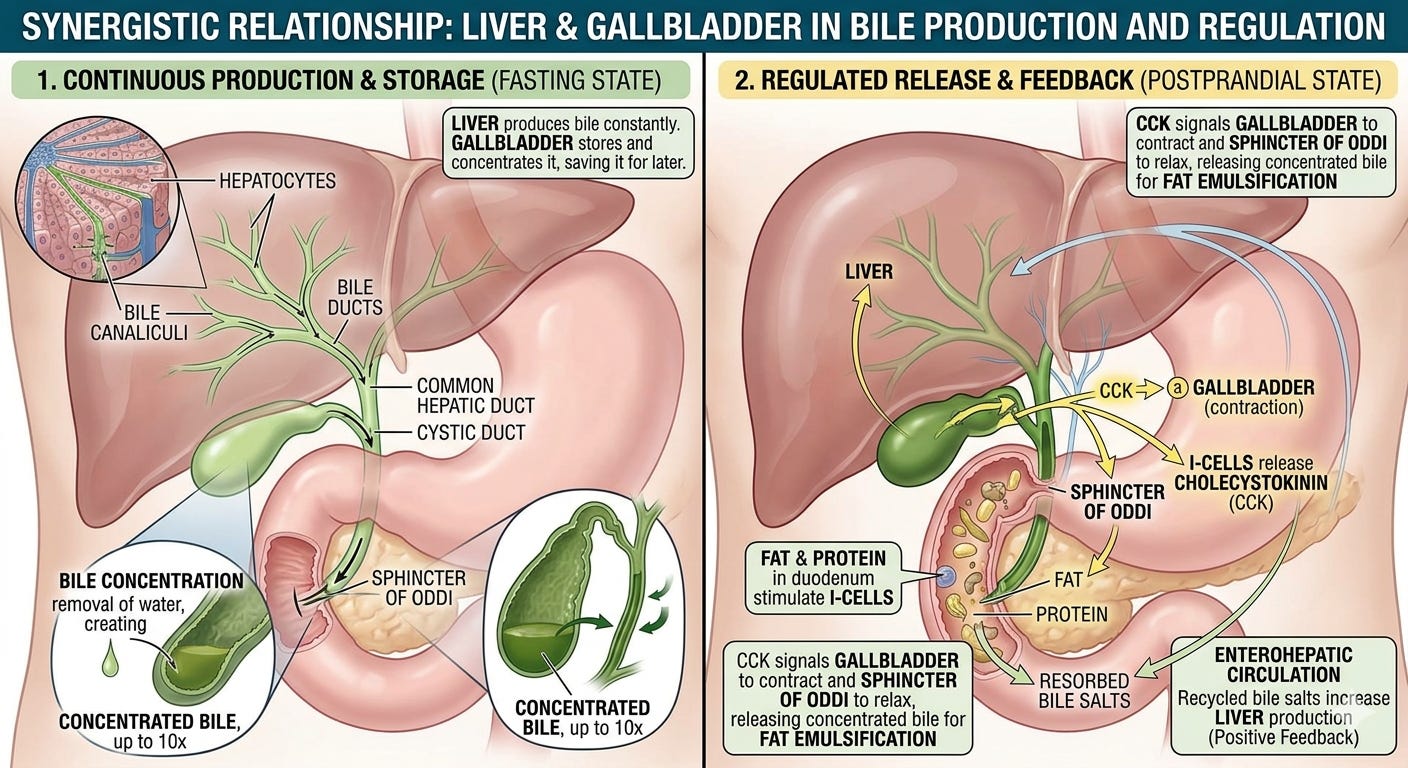
The gallbladder and liver operate as a deeply interconnected mechanical system. Understanding this synergy is key to maintaining internal fluid dynamics and preventing stagnation.
The relationship between the liver and gallbladder is foundational to your internal chemistry. When looking at the gallbladder through its specific mechanical role,rather than a pure filter like the kidneys, the gallbladder acts as a holding reservoir or a pressure-valve tank for bile which is manufactured by the live until it is needed for digestion.r to break down fats.
The liver acts as the primary site for detoxification and bile production. When the gallbladder becomes stagnant, it can directly impact the efficiency of the liver’s detoxification processes. Bile becomes stagnant, thick, or sluggish (a condition called biliary stasis), crystals and stones form. If a stone blocks the exit, bile backs up, pressure builds, and a severe, potentially life-threatening infection (cholecystitis) can trigger an emergency surgical removal.
To prevent reaching that crisis point, the goal of proactive care is to keep bile thin, fluid, and continuously flushing so it cannot crystallize.
Liver: The Primary Detoxification Engine
The liver is essential for shielding your cells from damage and maintaining overall metabolic health. To support liver function and prevent system stagnation, consider the following:
Hepatoprotective Herbs: Utilize herbs like Milk Thistle and Rosemary for their potent antioxidant properties, which are designed to shield cells from damage.
Bitter Botanicals: Incorporate Dandelion Root and Artichoke to stimulate healthy flow and support the liver’s natural rhythm.
Gallbladder: Bile Storage and Management
As the reservoir for bile, the gallbladder must remain fluid to ensure smooth digestive health. Stagnation here can be addressed through targeted support:
Bile Mechanics: Support bile flow using bitter botanicals, which help to thin the bile and encourage movement.
Dietary Strategies: Incorporate consistent, healthy fats and soluble fiber. These nutrients are critical for managing bile mechanics, especially for individuals who have undergone gallbladder removal, to ensure the continued stability of the internal environment.
Here are the specific botanical, dietary, and lifestyle substances that can be used proactively alongside standard medical care.
1. Botanical Allies: Choleretics and Cholagogues
In herbal medicine, plants that protect the liver and stimulate the production and release of fluid bile are categorized as choleretics and cholagogues.
Dandelion Root (*Taraxacum officinale):
How it works: The bitter compounds in dandelion root stimulate the liver to produce thinner, more fluid bile and encourage the gallbladder to contract gently and flush out stagnant material before it can solidify into stones.
Application: Often taken as a decoction (a strong tea simmered from the roots) or a fluid extract before meals.
Milk Thistle (Silybum marianum):
How it works: Contains silymarin, a powerful compound that protects liver cells and improves the chemical composition of bile. It helps reduce the cholesterol saturation of bile, which is the primary component of most gallstones.
Artichoke Leaf (Cynara scolymus):
How it works: Highly effective at dramatically increasing bile flow. It assists the body in processing fats efficiently, reducing the structural workload and pressure on the gallbladder reservoir.
Turmeric (Curcuma longa):
How it works: The active compound, curcumin, is a potent anti-inflammatory that specifically stimulates gallbladder emptying.
Crucial Precaution: Because turmeric causes the gallbladder to contract strongly, it is excellent for prevention, but it should never be used if someone already has known, large gallstones, as it could accidentally push a stone into the bile duct and cause a blockage.
Emergency Awareness: Sudden, severe pain in the upper right abdomen radiating to the back or shoulder, accompanied by fever or nausea, requires immediate medical intervention.
2. Dietary Architecture: Keeping the Fluid Moving
The modern diet frequently contributes to gallbladder stagnation because of an “all-or-nothing” approach to fats.
The Problem with Chronic Low-Fat vs. Bad-Fat Diets: If someone avoids fats completely, the gallbladder never gets the chemical signal to contract and empty. The bile sits inside the reservoir for days, becoming thick and sludge-like. Conversely, heavy, highly processed, fried fats overwhelm the system.
Healthy Dynamic Fats: Incorporating small, consistent amounts of high-quality, clean fats—like extra virgin olive oil or avocado—signals the gallbladder to empty completely and regularly, keeping the system flushed.
The Power of Bitters: Incorporating bitter foods into the daily diet (arugula, radishes, endive, and apple cider vinegar) triggers a neural cascade starting on the tongue that tells the entire digestive tract to secrete bile and digestive enzymes before the food even hits the stomach.
Soluble Fiber: Psyllium husk, oats, and flaxseeds bind to excess cholesterol and bile acids in the intestinal tract, helping to excrete them and forcing the liver to utilize fresh cholesterol to make clean, new bile.
3. Structural and Lifestyle Prevention
Avoiding Rapid Weight Loss / Crash Dieting: One of the most common reasons very young, healthy people suddenly need their gallbladder removed is rapid weight loss or cycling diets. When the body breaks down fat too quickly, the liver dumps a massive surge of extra cholesterol into the bile, completely overwhelming the gallbladder and causing rapid stone formation.
Addressing the Leaky Gut and Estrogen Connection: The connection to leaky gut,—systemic inflammation stresses the liver’s filtration capacity. Additionally, higher levels of estrogen (from natural cycles, birth control, or pregnancy) naturally increase the cholesterol concentration in bile and decrease gallbladder movement. This is why young women are statistically at a much higher risk for gallbladder issues and why proactive liver/bile support is so vital for them.
A Unified Front
When someone is working to protect their gallbladder, these natural steps keep the physical plumbing clear, fluid, and moving. However, if someone ever experiences sudden, severe pain in the upper right abdomen that radiates to the back or right shoulder—especially accompanied by a fever or nausea—that means an acute blockage or infection may have formed, which requires immediate medical intervention to prevent rupture.
Liver Health (and Post-Removal of Gallbladder)
When a surgeon removes the gallbladder, they are only removing the storage tank. They are treating the symptom, not the source. The gallbladder was never the root cause of the problem; it was just the victim of a sluggish liver.The liver is still producing the exact same thick, stagnant, or chemically imbalanced bile that caused the stones or sludge in the first place.
Once the gallbladder is gone, the liver’s bile ducts are wired directly into the small intestine. Instead of a strong, controlled squeeze of concentrated bile when a person eats a fatty meal, there is now a continuous, weak, involuntary drip-drip-drip of raw bile into the digestive tract 24/7. This creates two distinct problems: not enough bile when eating fat (leading to bloating, gas, and floating stools), and too much constant acidic bile when the stomach is empty (leading to irritation, diarrhea, or leaky gut issues).
Here is exactly how to proactively support the liver and manage digestion for someone who has already lost their gallbladder.
1. Correcting the Root Source: Liver Support
Because the liver is the factory, we must keep its production lines running thin, clean, and fluid so it doesn’t form sludge or stones right inside the hepatic bile ducts.
Choleretics (Thinners): Dandelion Root and Milk Thistle are vital here. Because the gallbladder is already gone, there is no longer a risk of a stone blocking the gallbladder neck. These herbs help the liver produce clean, free-flowing bile.
Choline & TUDCA: Choline is an essential nutrient that helps the liver process fats and prevents a fatty liver, which directly stalls bile production.
TUDCA (Tauroursodeoxycholic acid): is a naturally occurring bile acid derivative. When taken as a supplement, it radically thins out the liver’s bile, clears out the hepatic pathways, and protects the liver cells from getting backed up and inflamed.
2. Managing the “No Storage Tank” Mechanics (Diet & Lifestyle)
Since the body can no longer store up a large reservoir of bile for heavy meals, the strategy has to shift to matching the liver’s new “continuous drip” reality.
Smaller, More Frequent Fat Portions: Eating a massive, heavy, fatty meal will now overwhelm the system because there isn’t enough immediate bile to break it down. Spreading out healthy fats (like avocado, olive oil, and clean proteins) into smaller amounts throughout the day prevents undigested fat from sitting in the gut and fermenting.
Ox Bile / Lipase Supplements (With Meals): This is one of the most effective tools for someone without a gallbladder. Taking a supplement containing Ox Bile and the enzyme *Lipase* right at the beginning of a meal replaces what the gallbladder used to do. It ensures fats are fully broken down, allowing the body to actually absorb critical fat-soluble vitamins (Vitamins A, D, E, and K) which people without gallbladders often become severely deficient in over time.
Soluble Fiber (Between Meals): Remember that continuous drip-drip-drip of bile when the stomach is empty? Free bile acids can severely irritate the lining of the intestines, contributing to leaky gut or chronic loose stools. Eating soluble fiber (like oatmeal, chia seeds, psyllium, or apples) acts like a sponge, soaking up that excess, irritating bile and carrying it safely out of the body.
The Broader Tapestry
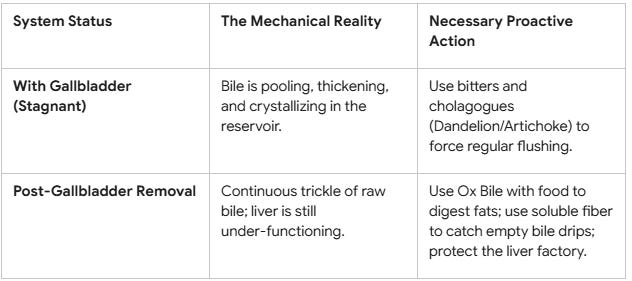
By shifting the focus to the liver and manually managing the chemical breakdown of food, someone who has had the surgery can completely avoid the long-term digestive pitfalls and keep their internal chemistry perfectly balanced.
To prevent liver failure and truly revitalize the liver factory, we have to look at the organ as a high-volume chemical processing plant. Every single minute, the liver filters about a quart and a half of blood, neutralizing toxins, metabolizing hormones, and processing nutrients.
Liver failure happens when chronic stress—whether from systemic inflammation, metabolic overload, or cellular toxicity—causes the liver cells (hepatocytes) to die off faster than they can regenerate, leading to scarring (cirrhosis).
To prevent this decline holistically, we focus on three main pillars: decongesting the processing lines, up-regulating the detox pathway, and providing the literal cellular building blocks for regeneration.
1. Up-Regulating Phase I and Phase II Detoxification
The liver neutralizes toxins in a two-step assembly line.
Phase I breaks down the toxin into an intermediate molecule (which is actually more toxic and creates heavy free-radical damage).
Phase II attaches a molecule to it to make it water-soluble so it can be flushed out through the bile or kidneys. If Phase II is sluggish, those highly reactive intermediate toxins back up, causing severe cellular destruction.
Glutathione Support (The Master Antioxidant): Glutathione is the primary molecule used in Phase II clearance. The body cannot easily absorb straight glutathione supplements, so we must provide the precursors:
N-Acetyl Cysteine (NAC): The ultimate rate-limiting building block for glutathione production. It protects liver cells from acute and chronic toxic insults.
Alpha-Lipoic Acid (ALA): A powerful antioxidant that actively recycles spent glutathione, keeping the cellular defense system continuously charged.
Cruciferous Sulfur Compounds: Broccoli sprouts, cabbage, Brussels sprouts, and garlic contain sulforaphane and glucosinolates. These compounds directly switch on the genetic pathways that manufacture Phase II detox enzymes.
2. Botanical Regeneration & Decongestion
When looking to prevent deep structural failure, we use plants that explicitly shield the outer membranes of liver cells and stimulate tissue repair.
Milk Thistle (Silybum marianum): The gold standard. The active complex, *silymarin*, acts like a physical shield on the cell membranes, preventing toxins from entering the cell. Furthermore, it stimulates RNA polymerase, which accelerates protein synthesis and literally forces the liver to rebuild its own damaged tissue.
Dandelion Root & Schisandra Berry:
Dandelion Root cleans the pathways by keeping bile thin and flowing, preventing fat and toxins from stagnating in the tissue.
Schisandra Berry is an adaptogen that enhances both Phase I and Phase II detox while significantly lowering liver enzymes (AST and ALT) during times of chemical stress.
3. Clearing Metabolic Congestion (Fatty Liver Prevention)
One of the fastest tracks to liver failure today is NAFLD (Non-Alcoholic Fatty Liver Disease). When the liver gets choked with fat triglycerides, the tissue suffocates, becomes inflamed, and turns to scar tissue.
Choline: Think of choline as the transport vehicle that moves fat out of the liver. Without enough choline, fat gets trapped inside the liver cells, causing them to swell and fail. Egg yolks (from high-quality, pasture-raised sources) and sunflower lecithin are premier dietary sources.
Eliminating Concentrated Fructose: While glucose can be used by every cell in the human body for energy, *fructose can only be metabolized by the liver*. When high-fructose corn syrup or concentrated fruit juices flood the system, the liver treats it exactly like alcohol—it instantly converts it into fat droplets within the liver cells, driving rapid inflammation.
The Holistic Blueprint for Daily Maintenance
Maintaining the fluid integrity of this system requires both stimulation of bile production and regulation of the reservoir’s mechanics.
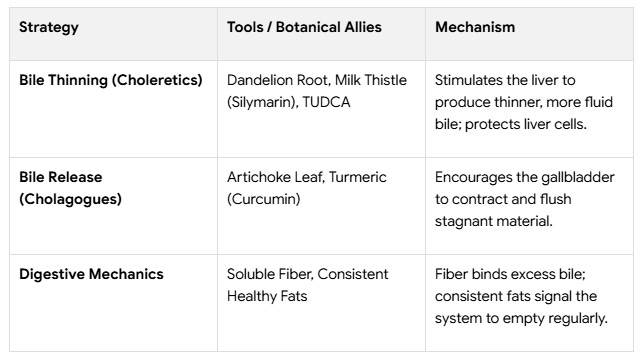
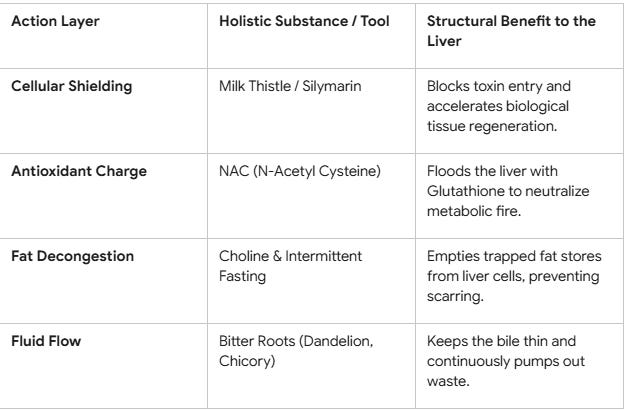
The Lifestyle Shift: Rest and Rhythm
Finally, the liver operates heavily on a circadian rhythm. In traditional Chinese medicine, the liver does its heaviest filtering and regenerative work between 1:00 AM and 3:00 AM. If a person eats a heavy, late-night meal right before bed, the liver’s energy is hijacked by digestion instead of deep cellular filtration.
Giving the digestive system a break by finishing dinner a few hours before sleep allows the liver to fully shift into its nightly structural repair phase—keeping the factory clean, resilient, and functioning perfectly for a lifetime.
Maintaining the fluid internal chemistry and structural integrity of both organs requires a dual-focus approach. By supporting the liver’s detoxification capacity with protective antioxidants and ensuring the gallbladder’s storage reservoir remains active through bitter stimulation and proper dietary fats, you create a balanced system that allows for efficient processing and elimination.
Liver and Gallbladder: Integrated Functional Health (Google Docs)